

.png?crc=4271212285)
MiCorr - The essential role of Master's students in enriching the database
4 August 2026
___________________________________________________________
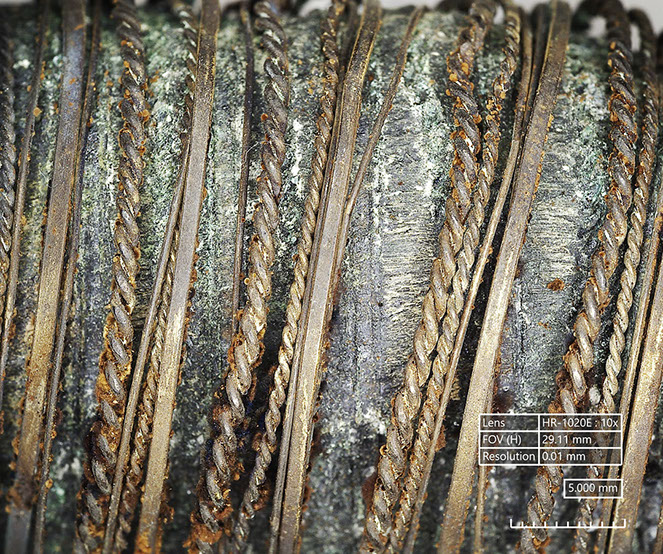
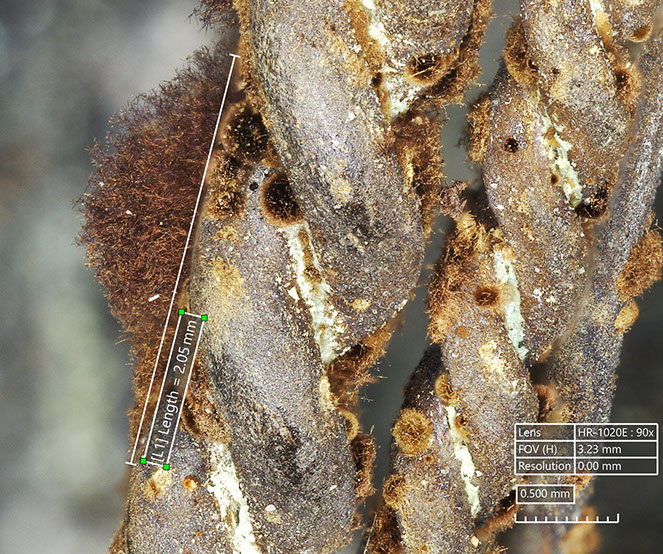
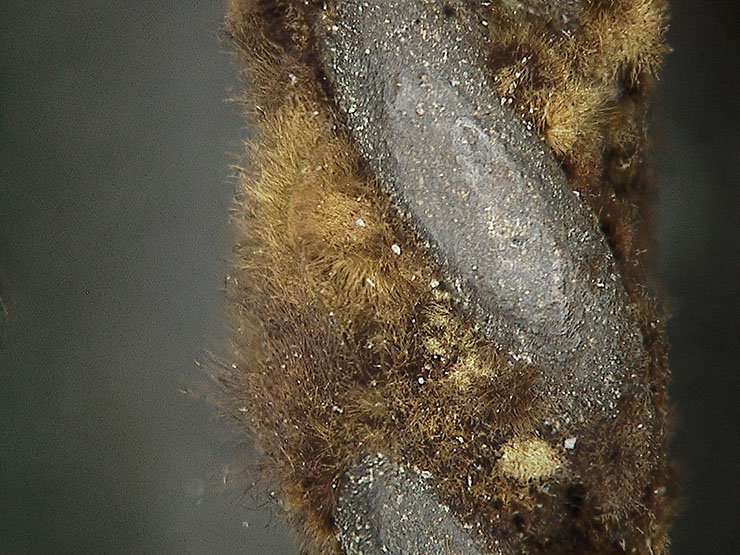
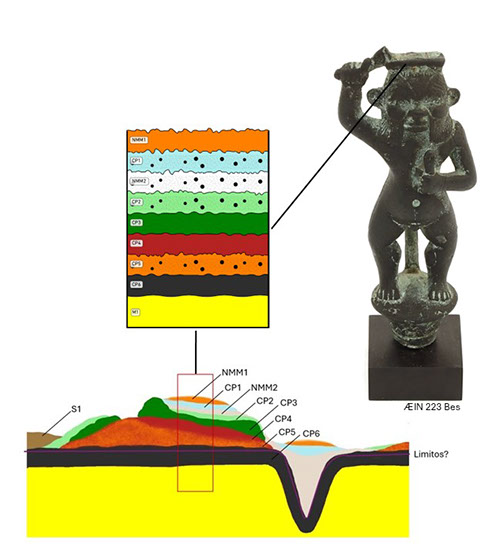
The “by stratigraphy representation” search tool in the MiCorr application—based on schematic representations of corrosion structures observed on objects under a binocular microscope—enables the identification of corrosion forms by comparing them with well-documented entries in the application’s database. It also provides access to information on corrosion mechanisms developing within the residual metal; these mechanisms are not visible on the surface but may require stabilization to ensure the long-term preservation of the materials.
This non-invasive diagnostic method contributes significantly to preserving the integrity of heritage materials. However, its effectiveness depends on the richness of the database. As part of their master’s theses, students in conservation programs are often required to conduct an in-depth analysis of the materials they are studying and contribute then to this enrichment.
- Ida Langemark, a postgraduate student at the Royal Danish Academy – Institute of Conservation, studied a vast corpus of Egyptian bronzes held at the Ny Carlsberg Glyptotek in Copenhagen, Denmark. Based on an in-depth study—using the MiCorr application—of a few representative objects from this corpus (specifically, the statuette of the Egyptian god Bes [AEIN 223] and the Egyptian statuette depicting a man with a baboon [AEIN 784]), it was possible to infer the forms of corrosion affecting the other objects in the collection.
- Amelia Hammond, a postgraduate student at University of Amsterdam, the Netherlands and now assistant conservator at the Mariners' Museum and Park, Newport News, USA, investigated copper-alloy objects from the collection of the Hollandia—an East India Company ship that sank off the coast of the United Kingdom. It is anticipated that incorporating certain materials exhibiting forms of corrosion characteristic of the marine environment (sword hilt NG-1980-27-H-693) into the MiCorr database will facilitate the diagnosis of other similar materials.
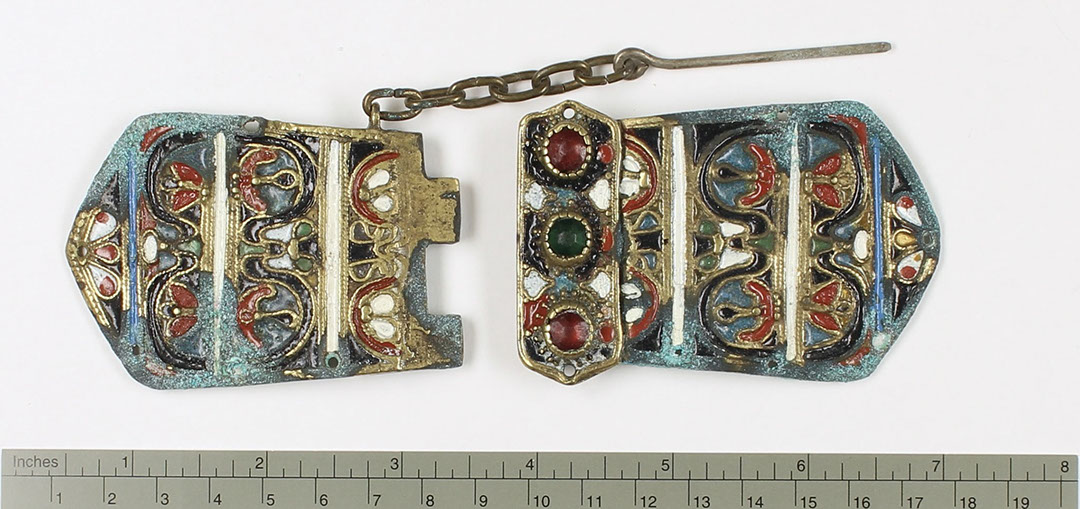
- Inès Golay, a postgraduate student at Haute Ecole Arc Conservation department in Neuchâtel, Switzerland, studied a Pafta belt buckle (VI-64513) that exhibited an unexpected form of corrosion—possibly linked to a biocide treatment and exacerbated by poor storage conditions. As these problems are recurrent in ethnographic museum collections, the form of corrosion observed and described now serves as a reference model. Claire Fossel, from the same conservation program, studied a Late Bronze Age Thai ladle (IIb 4016) whose corrosion structure was very similar to that of a MiCorr database entry: a bracelet from the same site (IIb 4025.01), examined in detail via cross-section.
These various contributions complement the hundred or so entries that make up the MiCorr database. It is to be hoped that this participatory approach will become widespread in the coming years and that such student work will regularly enrich the existing database, enabling it to become a reference resource for other conservation students and for the entire community of professionals working in the conservation of metal materials.

COST (European Cooperation in Science and Technology) is a funding agency for research and innovation networks. Our Actions help connect research initiatives across Europe and enable scientists to grow their ideas by sharing them with their peers. This boosts their research, career and innovation.
COST - Endless Metal © 2023 All Rights Reserved

Funded by
the European Union